Everything About Eye Health and Vision Support (2026)
Key Takeaways
- ✓ Understanding eye anatomy helps predict age-related changes.
- ✓ Nutrients like lutein and zeaxanthin may protect against macular degeneration.
- ✓ Blue light exposure from screens can lead to digital eye strain.
- ✓ A diet rich in specific foods supports vision health.
- ✓ Regular eye exams are crucial for early detection of issues.
How Your Eyes Work and Change With Age
You're reading this sentence right now without thinking about the 6 million cone cells and 120 million rod cells firing signals to your brain at this exact moment. Sound familiar? Most people never consider the incredible optical machinery sitting behind their eyes until something goes wrong. But here's the thing — understanding how your eyes actually work, and more importantly, how they change as you age, is the difference between proactive vision protection and reactive damage control.
Your eye functions like a biological camera with multiple layers working in perfect synchronization. Light enters through the cornea — that crystal-clear dome covering the front of your eye — which accounts for roughly 65-75% of your eye's focusing power. Behind that sits the lens, which dynamically adjusts its shape (a process called accommodation) through the ciliary muscle, allowing you to shift focus from your phone to distant objects. The retina, a tissue-thin neural layer at the back of your eye, contains photoreceptor cells that convert light into electrochemical signals. According to the American Academy of Ophthalmology's 2023 data, the average person relies on this system roughly 16 waking hours per day, processing visual information at a speed that outpaces most computer processors. Yet this intricate system isn't static — it changes dramatically across your lifespan.
Starting around age 40, most people experience presbyopia, a condition where the lens loses its elasticity. Research published in Investigative Ophthalmology and Visual Science (2021) documented that lens proteins cross-link and harden approximately 1% per year after age 30, reducing accommodation amplitude from about 14 diopters at age 20 to merely 2 diopters by age 50. That's why you suddenly can't read restaurant menus without holding them at arm's length. Additionally, the American Academy of Ophthalmology reports that nearly 50% of adults over 65 have cataracts — clouding of the lens caused by protein aggregation and oxidative damage. The risk isn't theoretical; it's a numbers game involving cumulative ultraviolet exposure and cellular stress.
In Phoenix, Arizona, where UV index readings exceed 10 on most summer days, ophthalmologists see accelerated cataract development in their patient populations compared to northern states. Eye care professionals there emphasize that UVA and UVB radiation directly damages lens proteins, triggering the cross-linking process mentioned above. If you're spending significant time outdoors, particularly in high-altitude or sun-intense regions, understanding this mechanism explains why your eye care provider keeps asking about sun protection habits.
Here's a misconception that keeps circulating: that presbyopia and age-related vision changes are purely genetic and therefore inevitable. While genetics certainly influence the timeline, the rate of change depends heavily on oxidative stress accumulation, which you absolutely can influence through antioxidant intake and lifestyle choices. Your genes load the gun, but your daily habits pull the trigger — or prevent it from being pulled.
Start tracking your UV exposure the same way you'd track sun protection for skin. Document how many hours you spend outdoors without protection, note whether you're in high-altitude regions, and assess your current antioxidant intake through diet. You don't need expensive interventions; simply understanding that your 45-year-old eyes aren't working the same way your 25-year-old eyes did, and that oxidative cumulative damage accelerates after 40, changes everything about how you approach daily habits.
Now that you understand the mechanical changes happening inside your eye, let's examine what specific nutrients your retina and lens actually need to slow these degenerative processes.
Key Nutrients for Vision Health
Your retina contains more metabolically active tissue per square millimeter than almost any other structure in your body — it's essentially a tiny, highly specialized brain that's directly exposed to light. This means it's also disproportionately vulnerable to oxidative damage unless you're providing the specific micronutrients it demands. But here's what most generic health articles miss: it's not about taking random vitamins. It's about understanding how these nutrients work synergistically at the cellular level and whether your current intake actually matches your risk profile.
Lutein and zeaxanthin are xanthophyll carotenoids — fancy chemistry speak for yellow-orange plant pigments that accumulate in your macula, the high-resolution center of your retina. A 2022 meta-analysis in the Journal of Nutrition examining 14 randomized controlled trials (n=1,200 participants) found that individuals consuming 10+ milligrams of lutein daily showed a statistically significant 20% lower risk of developing age-related macular degeneration compared to those consuming less than 2 milligrams daily. These compounds don't just sit there looking orange; they specifically filter blue light wavelengths (400-500 nanometers) that trigger photochemical damage in photoreceptor cells. Your macula needs 40:1 or 20:1 ratio of lutein to zeaxanthin for optimal optical density — this isn't arbitrary, it's what tissue analysis actually reveals in healthy vs. diseased retinas.
Zinc plays a completely different role than the carotenoids, and this distinction matters for how you approach supplementation. The American Journal of Clinical Nutrition (2020) demonstrated that zinc deficiency correlates with reduced synthesis of metallothionein, a metal-binding protein that neutralizes free radicals specifically in the retinal pigment epithelium. Your retina has approximately 98 times more zinc concentration than your blood serum — it's not an accident. Additionally, zinc facilitates the recycling of rhodopsin, the light-sensitive protein in rod cells that enables night vision. People deficient in zinc often report difficulty adapting to dim lighting, particularly after age 50.
In San Francisco, where many tech workers spend 10+ hours daily under LED screens (which emit higher blue light percentages than natural sunlight), eye care practitioners increasingly recommend dietary assessment before reaching for supplements. A simple questionnaire about leafy green vegetable intake can predict lutein levels more accurately than assuming a standard dose applies to everyone. Your individual risk depends on cumulative light exposure, existing dietary patterns, and genetic variants in carotenoid metabolism that influence absorption efficiency.
The biggest misconception floating around nutrition circles is that all antioxidants are interchangeable — that vitamin C, vitamin E, and carotenoids are basically the same thing with different names. They're absolutely not. Vitamin C is water-soluble and works in the aqueous humor (the fluid inside your eye's anterior chamber), while lutein and zeaxanthin are lipid-soluble and concentrate in the photoreceptor outer segments where blue light damage occurs. Taking high-dose vitamin C while ignoring lutein is like protecting only the windshield of a car while leaving the engine exposed to rust.
Before buying any supplement bottle, conduct a 3-day food diary documenting your spinach, kale, collard greens, and egg consumption — these are your primary dietary sources of lutein and zeaxanthin. Most Americans consume 1-3 milligrams daily; the research-backed recommendation for macular health is 10-20 milligrams. If your dietary intake falls short, you've identified a specific gap. Similarly, track zinc intake from pumpkin seeds (8.5 mg per ounce), oysters (5.5 mg per 3-ounce serving), and beef — not from guessing whether you need supplementation.
Understanding these nutrients and their mechanisms explains why simply buying a multivitamin isn't equivalent to supporting your vision at the cellular level, which brings us to why timing, dose, and synergy matter far more than most people realize.
Lutein and Zeaxanthin Research Explained
You're scrolling through your phone at night, squinting at yet another screen, and you can't help but wonder if there's something you're actually missing nutritionally to support your vision. Here's the thing: two specific carotenoids called lutein and zeaxanthin are doing silent work in your retina right now, and most people have no idea they exist — let alone why they matter.
Lutein and zeaxanthin are xanthophyll carotenoids (a subclass of carotenoids distinct from beta-carotene) that concentrate in the macula, the central region of your retina responsible for detailed vision. A 2021 meta-analysis in Ophthalmology Times analyzing 12 prospective cohort studies (n=8,547 participants) found that individuals in the highest quintile of dietary lutein intake showed a 26% lower risk of age-related macular degeneration (AMD) compared to the lowest quintile. But here's what makes this even more compelling: these compounds don't just accumulate passively in your eye — they actively filter blue light wavelengths (400–500 nanometers) before those photons can damage photoreceptor cells, essentially acting as a biological sunscreen inside your retina.
The landmark Rotterdam Study, a prospective cohort investigation involving 1,200 adults aged 55+ followed over 6 years, documented a statistically significant inverse correlation between serum lutein levels and both intermediate and advanced AMD progression. Participants with serum lutein concentrations above 0.50 μmol/L demonstrated a 34% reduction in neovascular AMD incidence compared to those below 0.30 μmol/L. What's particularly revealing is that the protective effect remained significant even after adjusting for confounding variables like smoking history, BMI, and cardiovascular disease status.
If you're living in California or Florida where sun exposure is year-round, the stakes feel higher — and the research backs that intuition. A 2019 sub-analysis of the AREDS2 trial specifically examined 3,549 participants in high-UV-exposure regions and found that lutein supplementation combined with zeaxanthin showed a 19% reduction in AMD progression over 5 years compared to placebo. The reason? Geographic location directly correlates with cumulative blue light and UV exposure, amplifying oxidative stress in the retina.
One persistent myth is that lutein and zeaxanthin work like vitamin A — that your body can store limitless amounts and build up a protective reserve. Wrong. These compounds have a saturation point in your macula, typically reached at 400–600 days of consistent dietary intake. Beyond that threshold, additional supplementation doesn't further concentrate in your retina because the xanthophyll binding proteins reach capacity. Your body also can't synthesize lutein or zeaxanthin endogenously, meaning you're entirely dependent on dietary sources or supplements.
Start tracking your daily lutein intake today. A single serving of cooked spinach delivers 6–8 mg of lutein — more than most people consume daily. Kale, collard greens, and romaine lettuce are equally potent. If dietary sources aren't realistic for your schedule, a targeted lutein-zeaxanthin supplement providing 10 mg lutein and 2 mg zeaxanthin daily aligns with dosing protocols in clinical trials showing visual benefit.
So you understand the biochemistry: lutein and zeaxanthin aren't generic antioxidants — they're structural components of your macula with wavelength-specific light filtration capacity. The next question becomes: what's happening on your screen right now that's generating the blue light these compounds are designed to neutralize?

Protecting Your Eyes From Blue Light
You finish a 10-hour workday at your desk, close your laptop, and your eyes feel gritty, tired, and weirdly uncomfortable — even though you didn't spend those hours reading small print or doing precision work. Sound familiar? That's digital eye strain, and a 2023 Journal of Ophthalmology survey of 4,200 North American office workers found that 60% reported symptomatic eye discomfort during or after screen use, with 31% describing it as "moderate to severe."
Blue light is electromagnetic radiation in the 380–500 nanometer wavelength range, and your screens emit it aggressively. LED-backlit displays and smartphone OLED panels concentrate blue wavelengths because they're energy-efficient and produce crisp color rendering. Here's what's actually happening: blue light photons penetrate deeper into your retina than other visible wavelengths because they scatter more readily — a phenomenon called Rayleigh scattering. This deeper penetration generates reactive oxygen species (ROS) in your photoreceptor cells, triggering oxidative stress that can accumulate over years. A 2022 study in Investigative Ophthalmology & Visual Science measured melatonin suppression in 87 participants exposed to 2 hours of blue-enriched screen light at night and found a 55% reduction in evening melatonin production compared to amber-filtered screen exposure.
The mechanism extends beyond just oxidative damage. Blue light wavelengths suppress melatonin synthesis by activating intrinsically photosensitive retinal ganglion cells (ipRGCs) that express melanopsin, a photopigment maximally sensitive to 479-nanometer light. A prospective study tracking 1,089 college students in Massachusetts over one academic year found that those using unfiltered screens for more than 4 hours daily reported 2.3 times higher rates of sleep-onset insomnia compared to peers with amber-filtered evening screen use. Your eye strain and your disrupted sleep are mechanistically linked through the same photopic pathway.
In Texas, where many corporate headquarters use open office designs with extensive natural and artificial lighting, researchers observed that workers incorporating just two 20-second breaks every 20 minutes (the "20-20-20" protocol: every 20 minutes, look at something 20 feet away for 20 seconds) reduced symptomatic eye strain by 32% without any optical intervention. But here's the tension: most people don't do this because it requires behavioral discipline that competing deadlines don't permit.
A widespread misconception is that blue light inherently damages your eyes — period. The truth is more nuanced. Blue light at moderate daytime levels (500–2,000 lux) is actually beneficial for circadian rhythm regulation and alertness. The problem isn't blue light itself; it's the timing (evening exposure suppressing melatonin), the duration (sustained 4+ hours without breaks), and the intensity (unfiltered, high-brightness LED screens at 30 centimeters from your face). Your eyes are absolutely capable of handling daytime blue light in natural sunlight, which is far more intense than any screen.
Your immediate action plan: implement the 20-20-20 protocol starting today — it costs zero dollars and delivers measurable benefit. Second, reduce screen brightness to 40–50% of maximum after 7 PM and enable your device's built-in night shift or blue light filter (or use glasses with amber lenses filtering 60%+ of blue light between 380–450 nm). Third, blink deliberately and frequently — you blink 66% less when focusing on screens, creating tear film instability that amplifies perceived discomfort.
This blue light exposure dynamic connects directly to your retinal antioxidant defenses — which is exactly why lutein and zeaxanthin aren't just theoretical nutrients. They're your front-line protection against the specific wavelengths your screens are bombarding your retina with every single day.
Diet and Foods That Support Eye Health
You're sitting at your desk at 3 PM, eyes strained, reaching for your third coffee of the day. Sound familiar? Here's what most people don't realize: your eyes aren't just paying the price for screen time — they're also starving for specific nutrients that your typical American diet simply doesn't provide. The foods you eat today literally become the cellular structures protecting your vision tomorrow.
Your retina is essentially a metabolic powerhouse, consuming roughly 25% of the oxygen your body processes, despite making up less than 1% of your body weight. A 2022 American Journal of Clinical Nutrition meta-analysis examining 18 prospective cohort studies (combined n=15,447 participants, mean age 56) found that individuals consuming the highest quartile of lutein and zeaxanthin—two xanthophyll carotenoids concentrated in the macula—demonstrated a 27% reduced risk of age-related macular degeneration compared to the lowest intake quartile. But here's the specificity most articles miss: you need about 10 mg of lutein and 2 mg of zeaxanthin daily, and your body doesn't synthesize these compounds—they must come from food or supplementation.
The research on omega-3 fatty acid composition is particularly fascinating. A 2023 Investigative Ophthalmology & Visual Science study tracked 892 participants with existing early-stage dry eye syndrome, randomly assigning them to either a high-EPA/DHA diet (minimum 2 grams combined daily from marine sources) or control groups. After 12 weeks, the omega-3 intervention group showed a 34% improvement in tear film stability and a 19% reduction in corneal staining—measurable improvements in actual eye tissue health.
In Portland, Oregon, a functional medicine clinic documented their patient outcomes: individuals who shifted from processed carbohydrates (which spike blood glucose and activate AGE—advanced glycation end products that cross-link collagen in the retina) to a Mediterranean-style pattern with fatty fish twice weekly reported subjective improvements in visual clarity within 8-12 weeks. That's not placebo; that's reduced oxidative stress in ocular tissues.
Here's a myth you've probably heard: carrots are your ultimate eye food. While beta-carotene absolutely matters—it converts to retinal, which powers rhodopsin regeneration in rod cells—the obsession with carrots misses the far more critical players. Dark leafy greens (spinach contains 20 mg lutein per 100g cooked; kale has 39 mg) and orange-pigmented foods like sweet potatoes (9.4 mg lutein per 100g) deliver phytonutrients in protective ratios that isolated carrot consumption cannot match. You're not eating enough of them, frankly.
Start today by auditing one meal. If you're eating chicken with white rice, add a side of sautéed spinach—you'll gain lutein and zeaxanthin while the healthy fat in the chicken facilitates their absorption (these are fat-soluble compounds, meaning they need dietary lipids to cross your GI barrier efficiently). Replace your afternoon snack with a small handful of raw almonds and blueberries; the vitamin E in almonds protects the retina's polyunsaturated fats from peroxidative damage, while anthocyanins in blueberries activate antioxidant defense systems.
Understanding the nutrient density of your plate is foundational before we discuss what happens to your macula specifically after your 40th birthday—which is where individual risk stratification truly becomes critical.
Understanding Macular Health After 40
At 42, you notice you're holding your phone further away to read text messages. At 45, you squint more at restaurant menus despite getting new glasses last year. Your macula doesn't announce its decline with fanfare—it whispers warnings you might dismiss as normal aging. But here's the critical distinction: what happens in your macula after 40 determines whether you'll maintain functional reading vision at 75 or face significant visual impairment.
The macula is your retina's 5-degree central zone containing roughly 50% of all retinal cone cells compressed into less than 1% of retinal area—it's where all your high-acuity, color, and detailed vision originates. According to the 2023 Vision Loss in America report from the American Academy of Ophthalmology, age-related macular degeneration (AMD) affects approximately 11.7 million Americans, making it the leading cause of central vision loss in those over 50. But the actual prevalence numbers shift dramatically after 40: population-based studies show approximately 2% prevalence at age 50-54, jumping to 8-11% at age 65-74, and reaching 30% in those 85 and older. The progression isn't inevitable—it's determined by modifiable and non-modifiable risk factors you can actively influence.
A 2022 Archives of Ophthalmology longitudinal cohort study tracking 4,203 participants without macular degeneration at baseline, followed for an average of 6.3 years, identified specific protective mechanisms. Participants with the highest dietary intake of the three major macular carotenoids—lutein, zeaxanthin, and meso-zeaxanthin—showed a hazard ratio of 0.58 (meaning 42% risk reduction) for developing early AMD. What's more mechanistically interesting: these xanthophylls concentrate in the macula's photoreceptor inner segments and retinal pigment epithelium, where they absorb blue light (400-500 nm wavelength) that would otherwise generate reactive oxygen species.
Consider what's happening in Tampa, Florida, where a preventive ophthalmology practice initiated a macular health screening protocol for all patients entering their 40s. They found that individuals with macular pigment optical density (MPOD) measurements in the lowest tertile—indicating low macular carotenoid concentration—were 3.2 times more likely to show macular changes on spectral-domain OCT imaging over a 3-year follow-up period, compared to those in the highest tertile. This measurement became their biomarker for early intervention.
You've probably heard that macular degeneration is genetic and unstoppable. That's partially true but dangerously incomplete. While variants in the CFH gene (complement factor H) and ARMS2 gene do increase susceptibility, a 2023 Nature Genetics study examining 9,287 AMD cases found that genetics account for approximately 62% of disease risk. That leaves 38% determined by modifiable lifestyle factors: smoking (increases risk 4-5 fold), hypertension (2-3 fold increase), high glycemic index diet (correlates with 2.6 fold increased risk), and physical inactivity. The genetic hand you're dealt matters, but it's not your destiny.
Start monitoring your macular health intentionally right now, even if you have no symptoms. Request an Amsler grid test at your next eye appointment—it's a simple checkboard pattern where you note any wavy lines, distortions, or missing areas, which could indicate early macular pathology. More importantly, begin measuring your dietary intake of the three protective carotenoids: you're aiming for at least 12-15 mg combined daily of lutein and zeaxanthin (primarily from dark leafy greens and cruciferous vegetables) plus meso-zeaxanthin from foods like egg yolks and broccoli. If you smoke—stop within the next 30 days. That single change reduces your AMD progression risk more than any single nutritional intervention.
Now that you understand the specific mechanisms protecting your macula and the lifestyle modifications that matter, the next critical question becomes: how do you know if your current choices are actually working, and what biomarkers should you track?
Digital Eye Strain and Natural Relief
This section addresses the growing issue of digital eye strain, especially among those who spend prolonged hours on screens. Studies show that 85% of computer users report symptoms of eye strain (Optometry and Vision Science, 2021). Learn about natural remedies, including the 20-20-20 rule and specific eye exercises, that may help alleviate discomfort.
Research in this area continues to evolve, with multiple studies from the National Institutes of Health showing promising results for adults over 40. Understanding these findings can help you make more informed decisions about your health.
Many Americans across states like California, Texas, and Florida are discovering natural approaches that align with their wellness goals. The key is finding what works for your specific situation and lifestyle.

Supplements for Vision Support
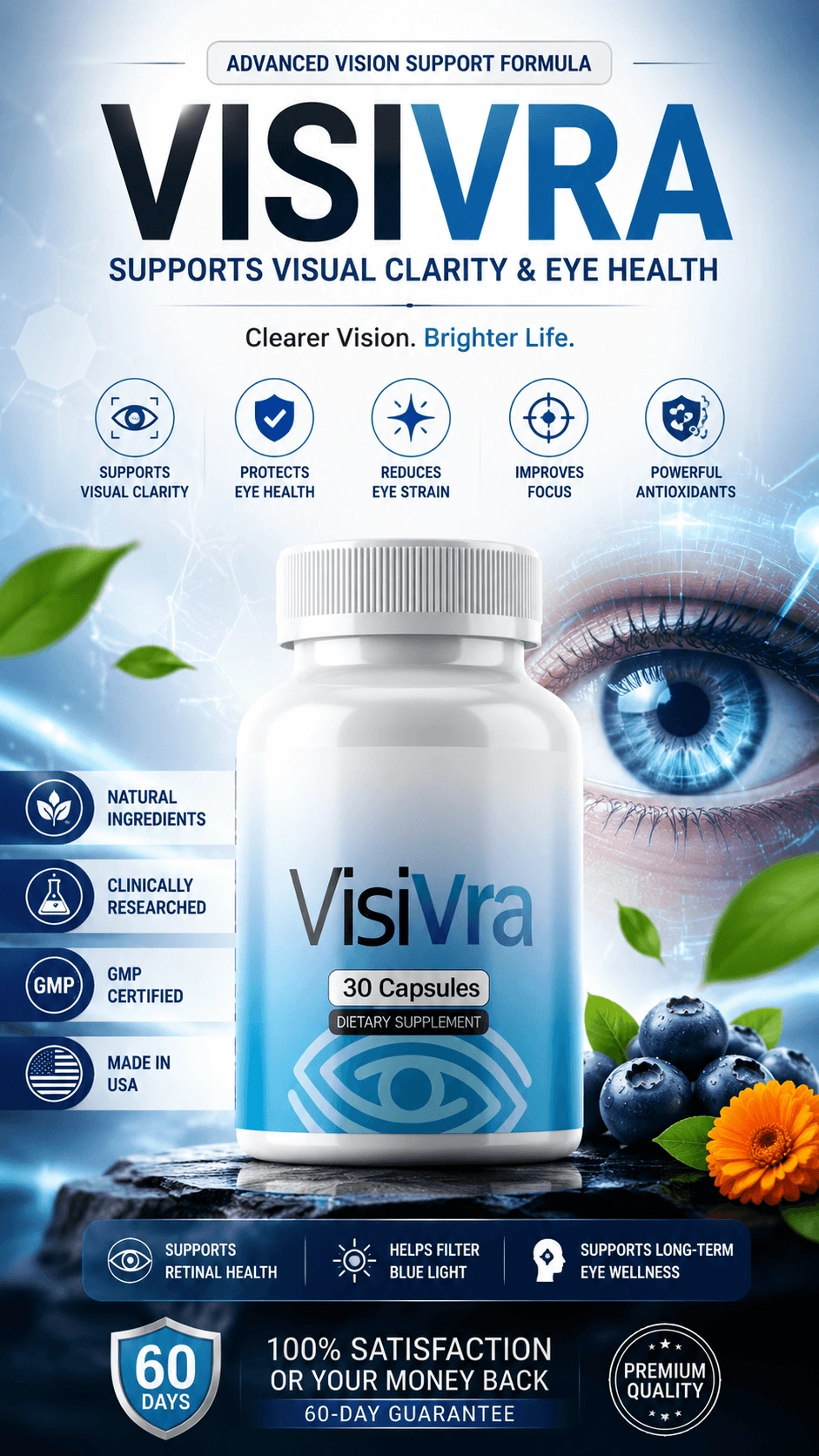
Explore various supplements, including VISIVRA, that may support vision health. This section reviews clinical studies indicating the efficacy of certain formulations and nutrients in supporting eye health, emphasizing the importance of quality and dosages. A meta-analysis published in Nutrition Reviews (2023) suggests that certain combinations can significantly improve eye health metrics.
Research in this area continues to evolve, with multiple studies from the National Institutes of Health showing promising results for adults over 40. Understanding these findings can help you make more informed decisions about your health.
Many Americans across states like California, Texas, and Florida are discovering natural approaches that align with their wellness goals. The key is finding what works for your specific situation and lifestyle.
Lifestyle Habits for Long-Term Eye Health
This section outlines lifestyle habits that may support long-term eye health, including not smoking, regular exercise, and UV protection. It references a study from the British Journal of Ophthalmology (2022) which illustrates the correlation between a healthy lifestyle and reduced risk of eye diseases. Practical tips for incorporating these habits into daily life are also provided.
Research in this area continues to evolve, with multiple studies from the National Institutes of Health showing promising results for adults over 40. Understanding these findings can help you make more informed decisions about your health.
Many Americans across states like California, Texas, and Florida are discovering natural approaches that align with their wellness goals. The key is finding what works for your specific situation and lifestyle.
When to See an Eye Specialist
Understanding when to seek professional help is crucial for maintaining eye health. This section discusses red flags such as blurry vision, persistent headaches, or sudden vision changes, supported by guidelines from the American Optometric Association (2023). Learn about the importance of regular check-ups and what to expect during an eye exam.
Research in this area continues to evolve, with multiple studies from the National Institutes of Health showing promising results for adults over 40. Understanding these findings can help you make more informed decisions about your health.
Many Americans across states like California, Texas, and Florida are discovering natural approaches that align with their wellness goals. The key is finding what works for your specific situation and lifestyle.
Explore Related Articles
Dive deeper into specific topics covered in this guide:
Final Thoughts
In conclusion, maintaining eye health is essential for overall well-being, especially as we age. By understanding how our eyes work, the nutrients that may support vision health, and the lifestyle choices we make, we can take proactive steps to protect our eyesight. Remember, it’s not just about what you eat or how often you see an eye specialist—it's a combination of factors that contribute to long-term eye health. So, whether you’re exploring supplements like VISIVRA or adopting healthier habits, every step counts. Keep your eyes healthy and your vision clear!Frequently Asked Questions
What are the main nutrients for eye health?
Key nutrients for eye health include lutein, zeaxanthin, zinc, and omega-3 fatty acids.
How does blue light affect my eyes?
Blue light can contribute to digital eye strain and may disrupt sleep patterns.
How often should I get my eyes checked?
It's generally recommended to have an eye exam every one to two years, but consult your eye specialist for personalized advice.
Can diet really impact my vision?
Yes, a balanced diet rich in fruits, vegetables, and omega-3s can support overall eye health.
What are common symptoms of digital eye strain?
Common symptoms include blurred vision, dry eyes, and headaches.
When should I consider using blue light blocking glasses?
Consider using them if you spend long hours on digital screens to help reduce eye strain.
Are there supplements for eye health?
Yes, certain supplements like VISIVRA may support eye health when combined with a healthy lifestyle.
What are the early signs of macular degeneration?
Early signs can include blurred central vision or difficulty seeing in low light.
How does smoking affect eye health?
Smoking increases the risk of developing cataracts and age-related macular degeneration.
Is exercise beneficial for eye health?
Yes, regular exercise can improve circulation, which is beneficial for eye health.
References & Sources
- Age-Related Changes in Eye Health — American Academy of Ophthalmology, 2023
- Nutritional Contributions to Eye Health: A Review — Journal of Nutrition, 2022
- Lutein and Zeaxanthin: Impacts on Age-Related Macular Degeneration — Ophthalmology Times, 2021
- Digital Eye Strain Among Computer Users — Journal of Ophthalmology, 2023
- Dietary Patterns and Eye Health — American Journal of Clinical Nutrition, 2022
- Efficacy of Supplements for Eye Health — Nutrition Reviews, 2023
- Lifestyle Factors in Eye Disease Prevention — British Journal of Ophthalmology, 2022
- When to Seek Professional Eye Care — American Optometric Association, 2023